Lecture 1: Introduction to Causal Inference
Causal Inference and Statistical Designs · Michaelmas 2026 · Qingyuan Zhao
Four words to think about
- What is mathematics?
- What is statistics?
- What is causality?
- What is design?
Up to three words or phrases.
Our answers
Mathematics · Statistics · Causality · Design
We will ask again later in the course.
If you believe your answers improve, I shall try not to take full causal credit.
Zulip
Sign in to the course Zulip.
The invitation link will be sent through Moodle.
One topic per question: Lecture N - Keywords (e.g. Lecture 1 - Potential outcomes)
Further information including scribed lecture notes can be found at https://www.statslab.cam.ac.uk/~qz280/teaching/causal-2026/.
A little etymology
| Mathematics |
Greek mathēma |
that which is learned |
| Statistics |
German Statistik |
describing the state |
| Causality |
Latin causa |
cause, reason |
| Design |
Latin designare |
mark out, designate |
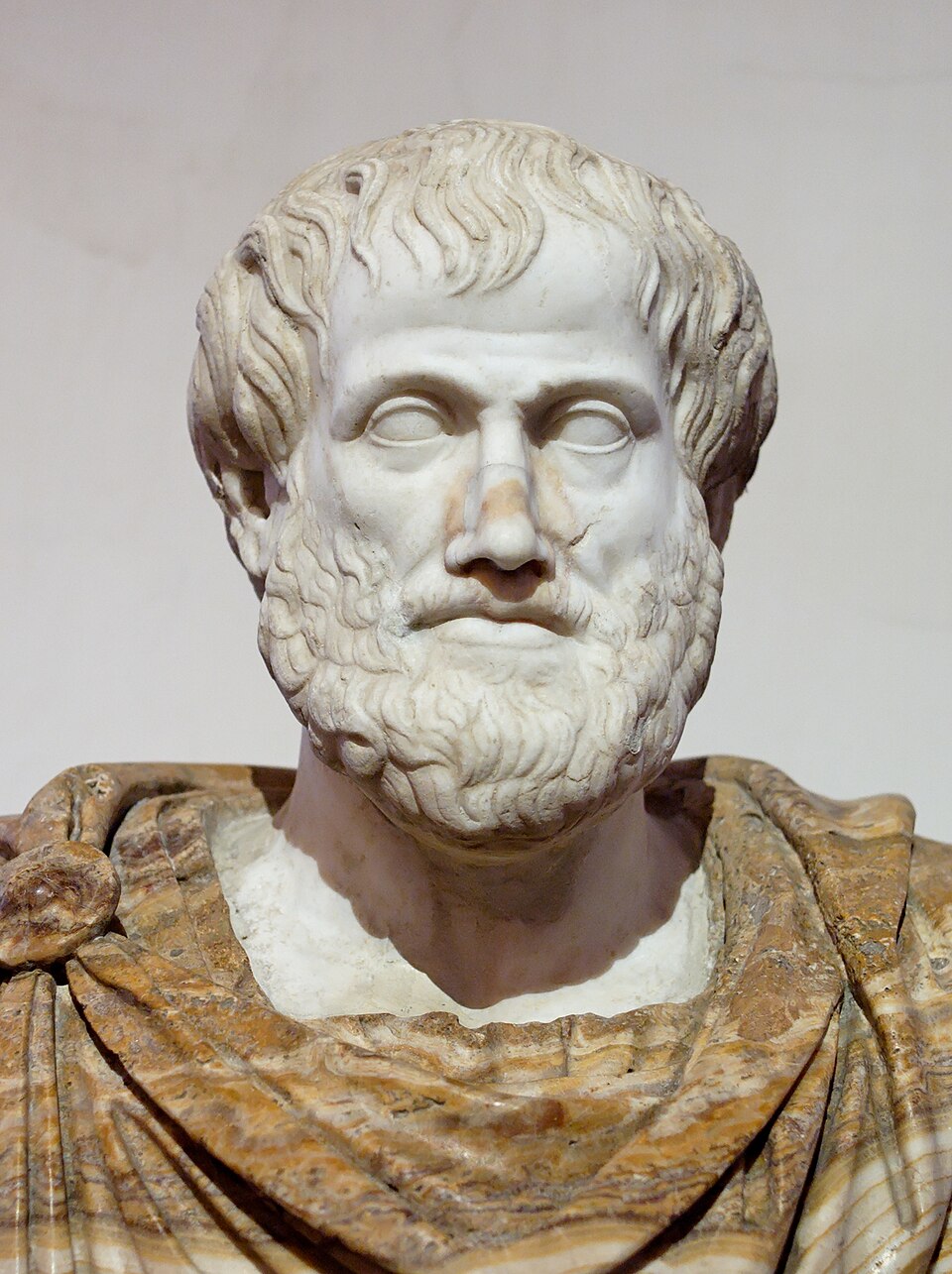
Aristotle (384–322 BCE)
A bronze statue:
- Material: the bronze.
- Formal: the figure represented.
- Efficient: the sculptor’s craft.
- Final: its purpose, e.g. commemoration.
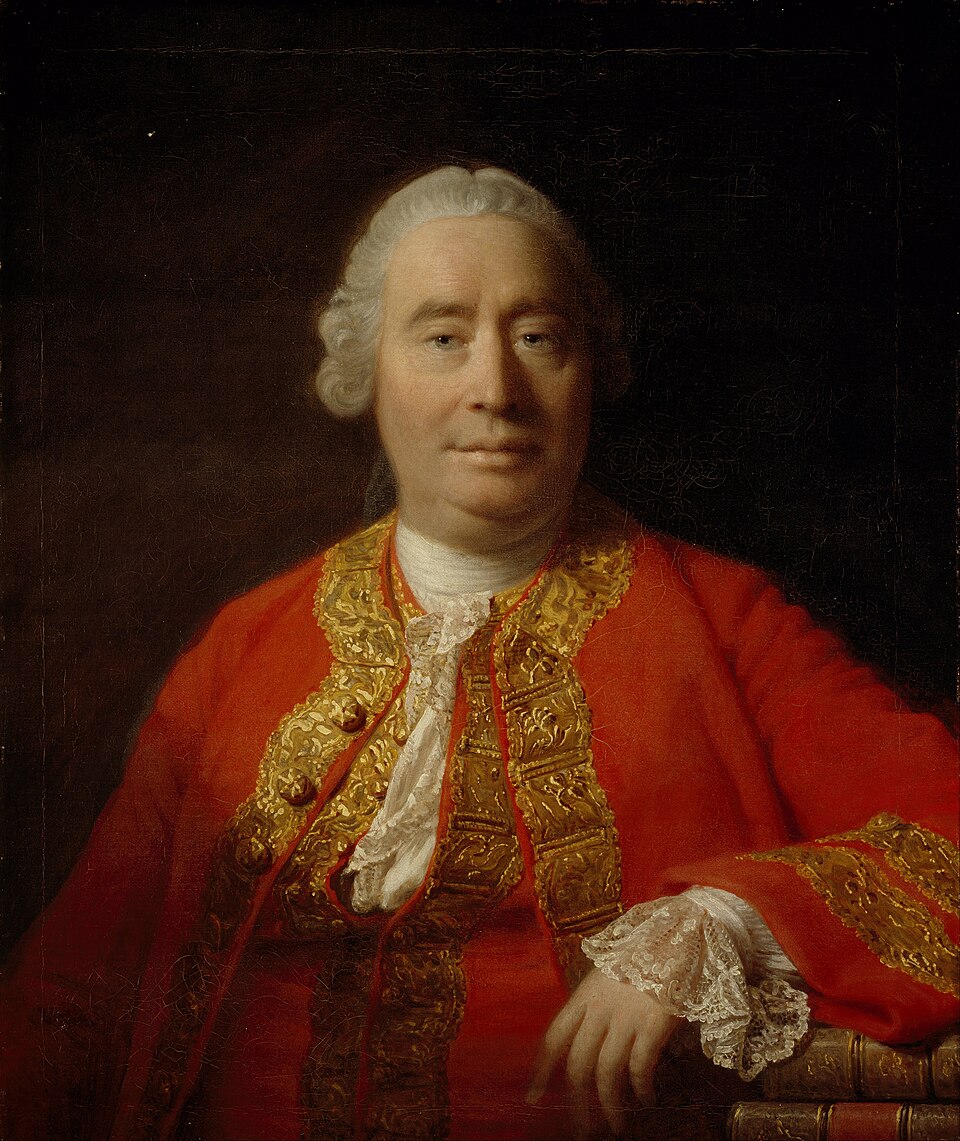
David Hume (1711–1776)
Empiricism: knowledge of the world rests on experience.
- “The sun always rises in the east.”
- “When someone dies, it’s never me.”
The Problem of Induction “It worked before” uses induction to justify induction.
“We are determined by custom alone to suppose the future conformable to the past.”
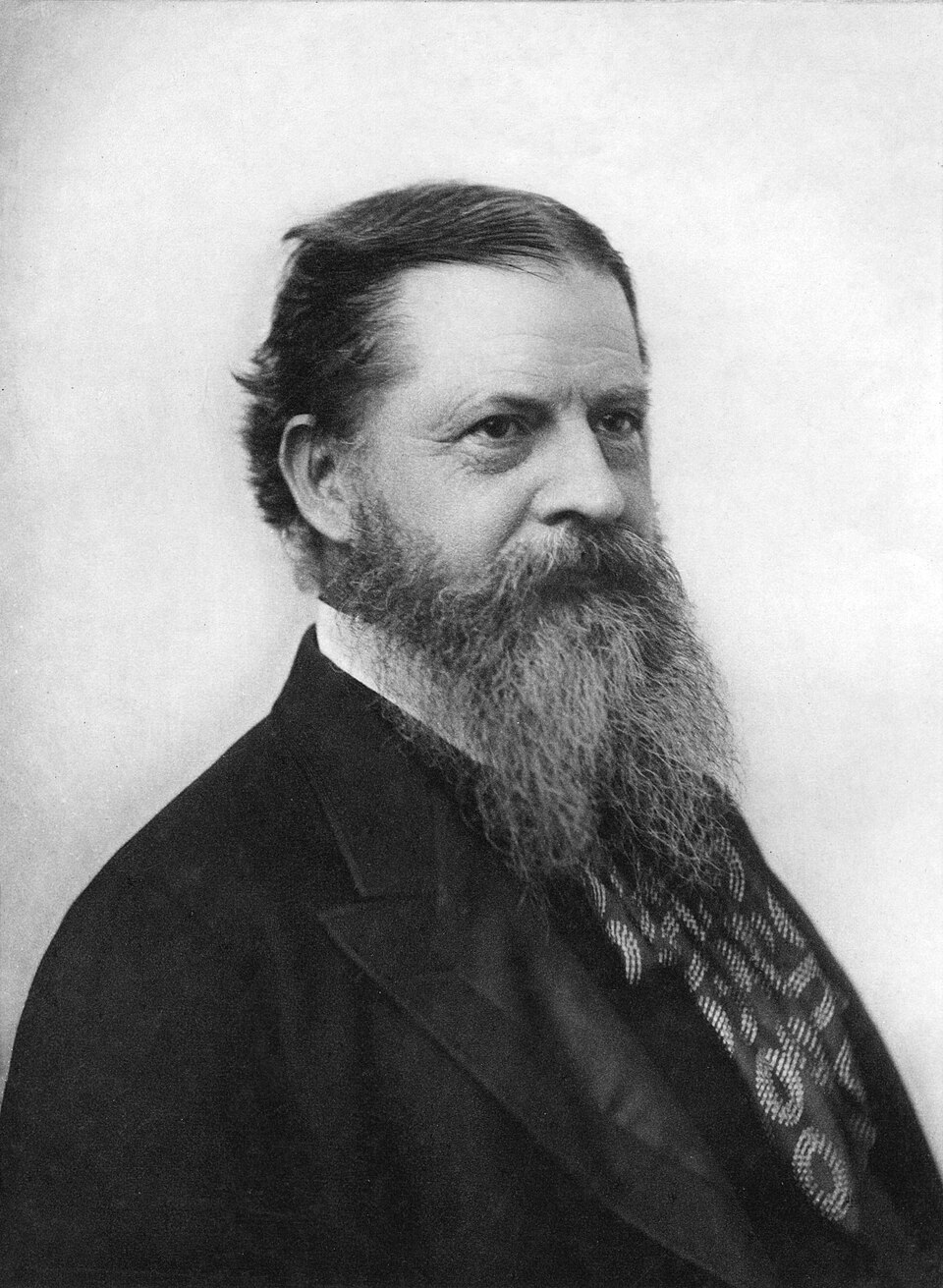
Charles Sanders Peirce (1839–1914)
Law of Errors
- Legendre (1805) · Gauss (1809) - Astronomical measurements, least squares.
- Laplace (1814) — regularities in births, marriages, misaddressed letters.
- Quetelet (1835) — government records; “social physics”.
- Darwin (1859) → Galton (1886) — heredity, natural selection, variation.
Laplace’s demon
We may regard the present state of the universe as the effect of its past and the cause of its future. An intellect which at a certain moment would know all forces that set nature in motion, and all positions of all items of which nature is composed, if this intellect were also vast enough to submit these data to analysis, it would embrace in a single formula the movements of the greatest bodies of the universe and those of the tiniest atom; for such an intellect nothing would be uncertain and the future just like the past could be present before its eyes.
George Udny Yule (1871-1951)
Did relief outside the workhouse increase pauperism?
| 1871–1881 |
13.19 |
0.755 |
−0.022 |
−0.322 |
| 1881–1891 |
1.36 |
0.324 |
1.370 |
−0.369 |
Coefficients in linear models predicting changes in pauperism.
On interpreting these coefficients as causes:
“Strictly, for ‘due to’ read ‘associated with.’”
Randomized experiments in psychophysics
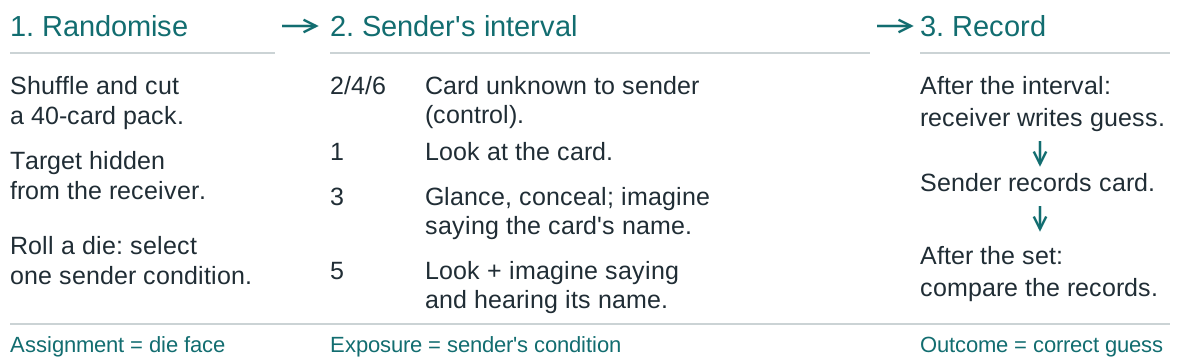
Coover (1917): telepathy. Can a sender mentally transmit a card’s identity?
Coover reported no evidence of thought-transference.
Smoking and lung cancer
Deaths per 1,000/year · age-standardized · male doctors, age 35+
| Lung cancer |
0.07 |
0.47 |
0.86 |
1.66 |
23.71 |
1.59 |
| Other cancer |
2.04 |
2.01 |
1.56 |
2.63 |
1.29 |
0.59 |
| Other respiratory |
0.81 |
1.00 |
1.11 |
1.41 |
1.74 |
0.60 |
| Coronary thrombosis |
4.22 |
4.64 |
4.60 |
5.99 |
1.42 |
1.77 |
| Other causes |
6.11 |
6.82 |
6.38 |
7.19 |
1.18 |
1.08 |
Potential outcomes and randomization
- Potential outcomes: assignments, exposure and consistency.
- Neyman–Rubin model: no interference.
- The fundamental problem of causal inference — Holland (1986).
- Average treatment effect and the difference-in-means estimator.
- Complete randomization: unbiasedness and Neyman’s variance formula (1923).





.jpg)